- The link building market in 2026 splits into two models: custom campaigns where the agency owns strategy and placement quality, and productized packages you order from a dashboard. Which one fits depends on who owns your strategy.
- Link Inbound tops this list as the founder-led custom option for small and mid-sized businesses in the US and Europe. It is our own agency, and the bias is disclosed in the open.
- Whichever model you choose, judge it the same way: relevant live placements, transparent reporting, and no ranking guarantees, because no honest provider makes them.
- How we picked, and where we are biased
- 1. Link Inbound
- 2. FATJOE
- 3. The HOTH
- 4. Loganix
- 5. WhitePress
- 6. Searcharoo
- 7. Authority Builders
- 8. OutreachMonks
- 9. Get Me Links
- 10. Rhino Rank
- Custom campaigns or productized links
- Red flags that should end the conversation
- Questions to ask before you sign
- Start with a test campaign
Search for a link building agency and you land in a wall of listicles where all ten entries are somehow the best. This is our version, with one difference: we run one of these agencies, we put it first, and we tell you exactly where the bias sits so you can discount it yourself.
The other nine are real providers described accurately, and for some buyers they are the right choice. The market has split into two models, custom campaigns and productized packages, and most bad agency experiences come from buying one when you needed the other. This list covers both, then shows you how to tell which one you need.
How we picked, and where we are biased
Link Inbound is our agency, so treat its position on this list the way you would treat any vendor ranking itself: as a claim to check, and our case studies are where to check it. The other nine entries earned their spots differently. Each is an established name with a clear model, and together they cover the realistic range of budgets and working styles. We compared four things: who owns the strategy, how placements are sourced, how transparent the reporting is, and which buyer each provider genuinely suits, using each provider’s own published pricing and service pages. What we did without exception: no provider below is described negatively, because most of them are good at exactly what they promise. The differences are structural, and the structure is the thing to choose. Two more things worth knowing about this page: nobody below paid to be on it, and there are no affiliate links in it, which is rarer in this genre than it should be.
1. Link Inbound
- Best for: small and mid-sized businesses that want a senior partner owning strategy and quality on every placement
- Location: Remote-first, clients across the US and Europe
- Model: Custom campaigns, founder-led, end to end
- Pricing: Custom, scoped after a free discovery call
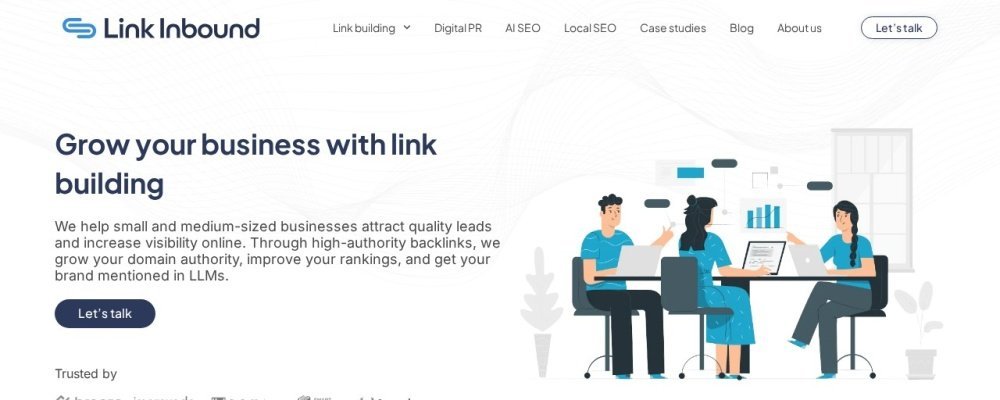
Link Inbound is a founder-led agency working with small and mid-sized businesses across the US and Europe. Campaigns run end to end under one roof: prospect research, outreach, negotiating placements on relevant industry sites, and reporting, with the founder involved in every campaign rather than an account tier away. The focus is deliberately narrow, fewer clients and fewer, better placements, on sites your buyers actually read.
That comes with the trade-offs a boutique implies: no dashboard of SKUs, no thousand-link months, and a discovery call before any commitment, because the strategy work is the point. The agency is award-winning, works in plain view, and would rather show you a campaign that worked than a badge wall. You can see exactly how campaigns run before you talk to us.
2. FATJOE
- Best for: agencies and in-house teams that need dependable, fast fulfillment at a known unit price
- Location: Cannock, UK
- Model: Productized SKUs ordered through a self-serve dashboard
- Pricing: Published per service, links from around £60
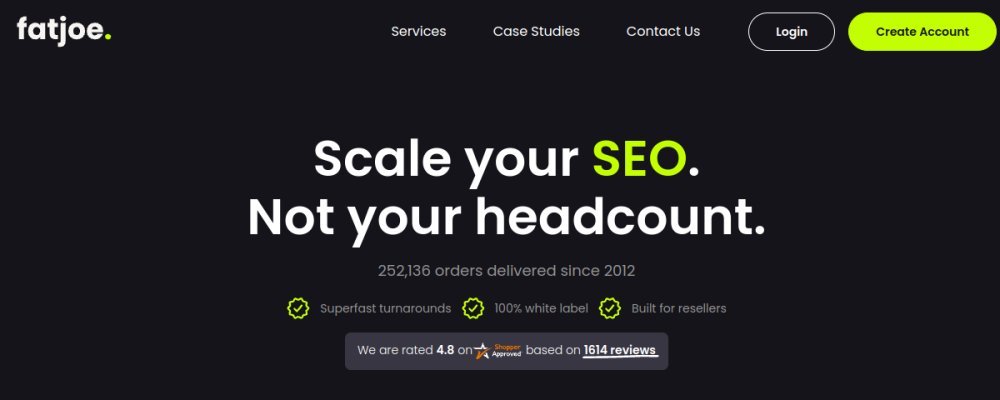
FATJOE, founded in the UK in 2012, is one of the most recognizable productized providers in SEO. The model is a self-serve dashboard with fixed SKUs across link building, content and digital PR, published turnaround windows, and per-unit prices. A large share of its customer base is agencies reselling fulfillment, and the whole operation is engineered for that: predictable output, order tracking, and no strategy layer, because the assumption is that you bring your own.
3. The HOTH
- Best for: buyers who want the widest packaged menu from a single vendor
- Location: St. Petersburg, Florida
- Model: Productized packages plus managed SEO plans
- Pricing: Published package pricing per service
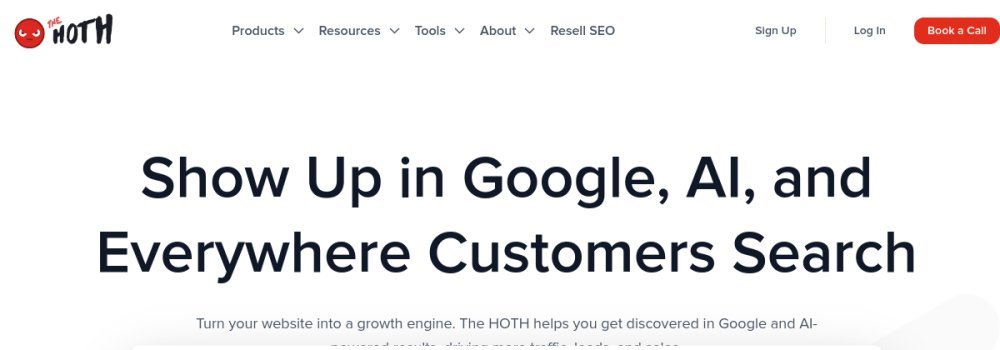
The HOTH has been a fixture of productized SEO since 2010, selling link building, content and managed SEO packages at serious volume. Its catalog runs from budget links to higher-tier placements, wrapped in a polished ordering experience with frequent promotions. The scale is the story: processes tuned for thousands of orders keep output consistent, and the strategic thinking stays on your side of the table. For teams that already know their gaps, that menu breadth is the draw: links, content, local and managed plans can all come from one invoice.
4. Loganix
- Best for: agencies that need a steady fulfillment bench under their own brand
- Location: Remote
- Model: Productized catalog: links, citations, audits, content
- Pricing: Published per deliverable
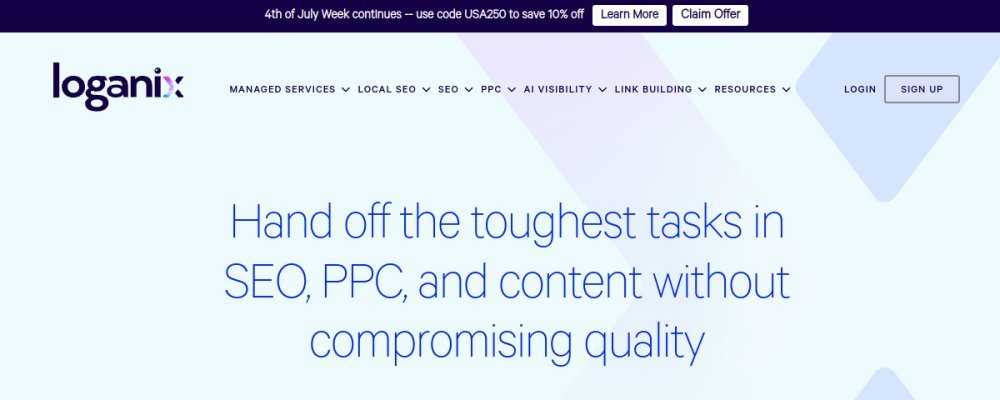
Loganix is a productized fulfillment shop aimed squarely at agencies, with links sitting alongside citations, audits and content in one catalog. The pitch is reliability over flash: vetted sites, clear deliverables, and services designed to slot into an agency’s own client reporting. It is a back-office partner more than a strategist, and it is honest about that.
5. WhitePress

- Best for: buying editorial placements across many countries and languages from one platform
- Location: Poland, operating internationally
- Model: Publisher marketplace with per-site listings
- Pricing: Listed per publisher
WhitePress is a publisher marketplace with one of the deepest catalogs in Europe. You search publishers by market, language, topic and metrics, see the price against each listing, and order the content and the placement in one flow. For international campaigns it has become infrastructure: agencies buy placements across several countries from one dashboard, working with local publishers they could never have prospected one by one. As with every marketplace, the platform executes and the strategy stays with you.
6. Searcharoo
- Best for: SEOs who buy links by specification and want a repeatable supply line
- Location: UK
- Model: Guest posts, niche edits and packages by metric tier
- Pricing: Published tiers
Searcharoo is a UK-based productized shop selling guest posts, niche edits and link packages with published metrics tiers. The proposition is simplicity: pick a tier, receive placements matching the stated metrics, repeat monthly. It is a clean way to buy a known quantity, provided you are equipped to judge which metrics actually matter for your niche, starting with what makes a high-quality backlink in the first place.
7. Authority Builders
- Best for: experienced SEOs who want hand-picked control over every placement
- Location: Remote
- Model: Marketplace: browse vetted inventory and order per site
- Pricing: Per placement, listed against each site
Authority Builders is a marketplace rather than an agency: you browse an inventory of vetted sites with traffic and metric data, pick placements yourself, and order. Control is the appeal. You see where every link goes before paying, and you can cherry-pick relevance in a way packages rarely allow. The flip side is that the marketplace does no strategy, no prospecting beyond its inventory, and no judgment calls for you.
8. OutreachMonks
- Best for: white-label buyers and small teams that want outreach placements hands-off
- Location: Remote
- Model: Productized blogger outreach with managed options
- Pricing: Package tiers by metric range
OutreachMonks sells productized blogger outreach with white-label plans, positioned on genuine outreach rather than inventory, at package prices. Deliverables are defined by metric ranges and niches, with managed monthly options for hands-off buyers. It is a middle path: more outreach authenticity than a marketplace, more structure than a bespoke campaign.
9. Get Me Links
- Best for: affiliate SEOs and operators who know their numbers and buy links as a line item
- Location: Remote
- Model: Link bundles: niche edits and guest posts in tiers
- Pricing: Bundle pricing
Get Me Links sells link bundles popular with the affiliate and SEO community, built around niche edits and guest posts in tiered packages. The appeal is straightforward value per link, sold to an audience that speaks fluent metrics and buys exactly what it understands. Like every package model, it works best when the buyer already knows precisely where links fit in the plan, because nobody on the other side is going to ask.
10. Rhino Rank
- Best for: small budgets building baseline link profiles where unit cost matters most
- Location: Remote
- Model: Curated links and guest posts from a vetted network
- Pricing: Published per link: curated from about $50, guest posts from about $80
Rhino Rank holds down the budget end with curated links and guest posts at some of the lowest credible prices in the market, and it publishes those prices on the site, which remains rare. The trade is transparent: modest sites, modest metrics, high volume, delivered reliably. For young sites building a baseline profile, or tests that need cheap iterations, that can be rational spend, as long as expectations match the price tag.
Custom campaigns or productized links
Nine of the ten names above are productized to some degree, and that is an accurate picture of the market: packages are what most of the industry sells. The models are legitimately different products.
Productized wins on speed, unit price and predictability, and it quietly transfers the hardest work, deciding what to build and judging what a placement is worth, back to you. Custom wins when that judgment is exactly what you are paying for: a campaign built around your market, competitors and goals, with someone senior accountable for outcomes rather than deliverables. Cost follows the same logic, since each engagement model carries its own link building pricing structure. If you want campaign quality delivered under your own brand, white label link building is the lane built for it.
There is also a cost neither invoice shows: management time. Packages are cheap partly because vetting sites, mapping anchors to pages, and sequencing the work all land on your calendar, and that time has a price even when nobody bills it. Custom retainers carry it for you, which is a real part of what the higher fee buys. Plenty of mature teams end up blending the two, a custom partner for the placements that decide the campaign, and packages for safe, repeatable volume underneath.
Red flags that should end the conversation
These apply to every model on this list, including ours. Guaranteed rankings or guaranteed link counts from specific sites: the publisher decides, so a guarantee means either a network they control or a promise they will quietly miss. A site list they refuse to show before you pay. Prices identical across every niche, because outreach difficulty varies wildly by industry and honest pricing reflects it. And reporting that shows metrics without live URLs: if you cannot click every placement, you are not looking at a report, you are looking at a summary of one. One more, subtler: promises to raise your DR or DA by a set amount. Those are third-party scores, they can be inflated with junk, and treating them as the goal is how profiles end up big and worthless.
Questions to ask before you sign
Four questions sort providers faster than any sales call. Where exactly will my links live, and can I see examples of placements in my niche? Who writes the content, and do I approve it before it goes out? What happens if a link drops within the first year? And who, by name, is responsible for my results? Custom shops should answer all four in specifics. Productized shops will answer the first three in process terms, which is fine, as long as you notice that the fourth answer is you.
Start with a test campaign
Whatever you choose from this list, buy small first. One month of a retainer, or three to five placements from a package provider, is enough to see everything that matters: the sites your money actually lands on, how relevant they are to your market, whether content went out in your voice or in filler English, and how the provider communicates when something slips. Judge the test on live URLs, and nothing else. If the placements are pages you would be comfortable showing a customer, scale. If the report is glowing and the URLs are not, you have your answer at the cheapest possible price, and no annual contract should ever come before that test.
Choose the model first, then the provider. Get that order right and most of the horror stories on this topic become avoidable.
Want campaigns instead of packages?